For wholesale persimmon sourcing in October, plan each order around the service date, variety type, required ripeness, and delivery frequency rather than kilograms alone. Asking for separate batches of ready-to-use fruit and fruit intended to ripen over the next few days helps restaurants, hotels, cafés, and catering kitchens maintain consistent texture, organise preparation, and reduce avoidable waste. Start by reviewing the persimmon product page, then confirm the intended kitchen use before ordering.
Choose the variety type for the menu application
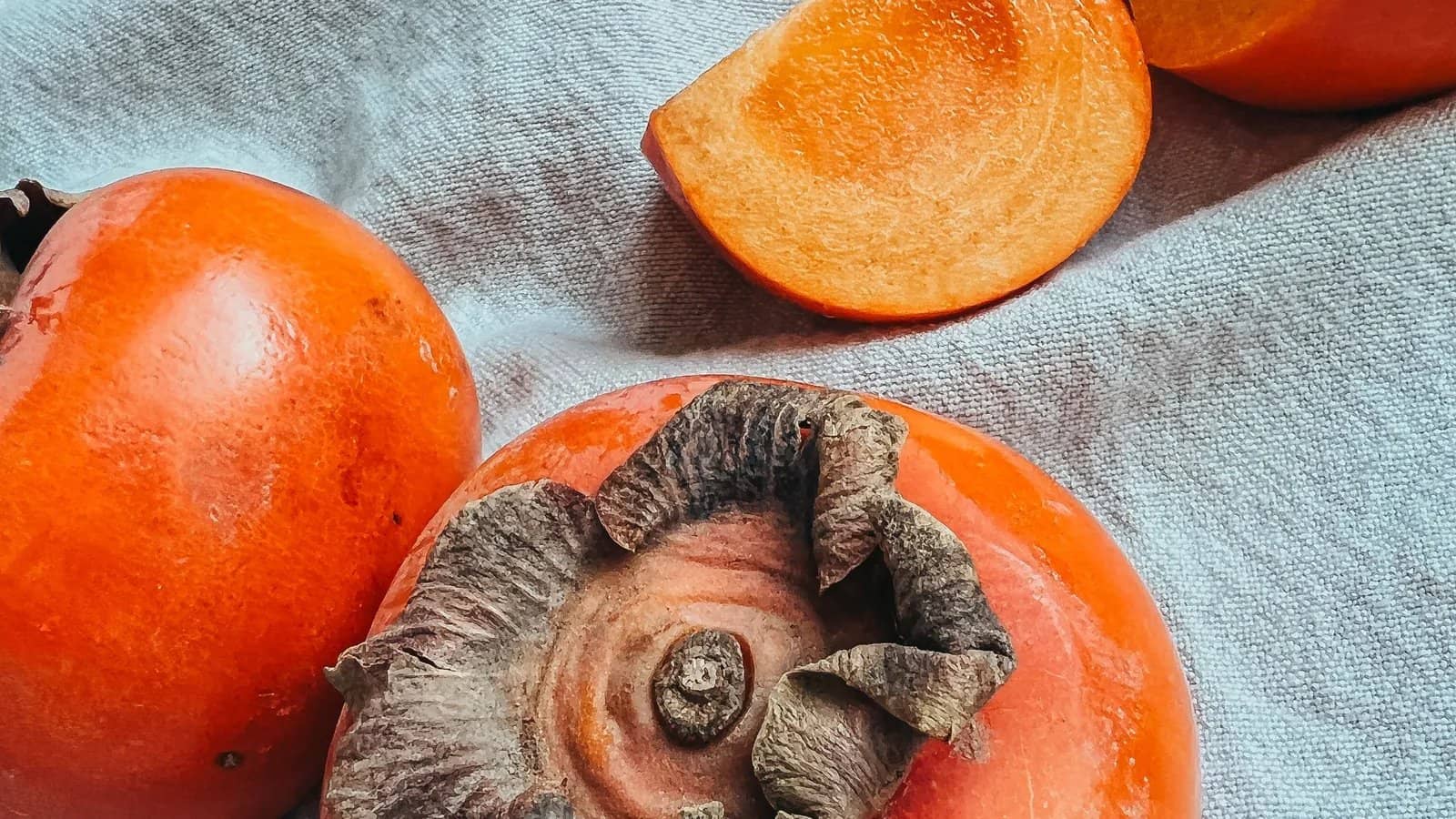
The first purchasing distinction is whether the persimmon is astringent or non-astringent. Heart-shaped or conical types commonly known as Hachiya may be distinctly astringent while firm. They generally show their sweeter, fuller character after becoming very soft, with a gel-like texture that can be spooned. A firm delivery of this type may therefore be unsuitable for immediate sliced service.
Fuyu is recognised by its flatter, tomato-like shape. As a non-astringent type, it can be eaten while firm or crisp, making it more predictable for plated presentations, salads, breakfast buffets, and preparations requiring neat cuts. A commercial name is not enough on its own, however. Ask the supplier to confirm the variety type, current firmness, and suitability for the planned day of use.
Useful wording for a purchasing specification
For slicing: Non-astringent type, even colour, firm texture, and no impact damage.
For purée or sauce: An astringent type may be suitable, but it should be fully soft at use, clean in flavour, and free from decay.
For mixed use: Firm fruit for service and fruit intended for controlled ripening should arrive in separate, clearly labelled cases.
Assess ripeness by purpose, not colour alone
A change from green towards yellow-orange or orange-red can be a useful indicator of commercial maturity, but colour must be interpreted alongside variety and production conditions. At delivery, examine colour distribution within each case, the area around the calyx, surface integrity, and differences in firmness. A very broad ripeness range can produce inconsistent results between shifts and create unexpected sorting work.
Harvest timing varies by region and variety. Research conducted under Dörtyol-Hatay conditions reported the second and third weeks of October as an appropriate harvest period for the Eylül genotype, and approximately mid-to-late October for Hachiya. This regional finding should not be treated as a fixed calendar for every growing area. Ask for origin, variety, and harvest date with each order.
Use a fast but documented delivery check
Do not judge a shipment by looking only at the top of a few cases. Take representative samples from different parts of the lot. Check whether the packaging is causing compression, whether fruit is pressing against adjacent pieces, and whether there are leaks, cracks, mould, cuts, or impact marks. Cut sample fruit according to the intended preparation and look for internal browning, excessive wateriness, or flavour defects.
Match variety type, quantity, case count, and lot details against the purchase document.
Record colour and firmness ranges by batch rather than making a decision from one piece of fruit.
Mark fruit for immediate use, controlled ripening, or rejection while it is still in the receiving area.
Carry photographs, weights, and sorting notes into the calculation for the next order.
Include ethylene sensitivity in storage planning
Persimmons are sensitive to ethylene. Holding them in an enclosed area with ethylene-producing produce can accelerate softening. That response may form part of a controlled ripening plan for an astringent type that needs to become fully soft, but accidental exposure can make service-ready Fuyu lose texture earlier than planned. Separate batches by use date and ripeness target, avoid stacking that restricts air movement, and give every shift the same inspection criteria.
Postharvest technical guidance cites 0 ± 1°C and 90–95% relative humidity as a commercial storage reference. These figures are technical benchmarks for a professional cold chain, not universal instructions for every operation. Variety, starting maturity, equipment capability, and the kitchen’s food-safety procedures must be considered together.
Make preparation yield visible through batch planning
Instead of buying a large volume at once, schedule staged deliveries around sales forecasts, reservations, event dates, and preparation capacity. Use the first batch to test the menu application and measure actual portion yield. For the next order, base the quantity on usable weight after removing skin, calyxes, bruised areas, and quality rejects rather than on gross incoming weight.
When the purchasing team records delivered quantity, accepted quantity, net prepared product, and portions served for every lot, recipe costing becomes more accurate. To compare related seasonal purchasing decisions, review the autumn fruit guide and the October wholesale quince sourcing guide.
Match menu use to texture
Firm, edible Fuyu can retain its shape in thin slices, cheese plates, grain salads, breakfast presentations, and brief hot preparations. Fully softened Hachiya is better suited to purées, sauces, creams, sorbet bases, cakes, or plated dessert components. For repeatable recipes, specify the required type and texture rather than writing only “persimmon” on the ingredient list.
For autumn plates, quince options can add firm texture and acidity, while pomegranate options can contribute colour and a contrasting bite. Measure preparation loss separately for each fruit. Applying one waste percentage to all produce can distort portion costs.
Build a routine that limits avoidable waste
Link the daily production list to ripeness order and clearly label the cases that should be used first.
Prepare an approved secondary-use plan for cosmetically imperfect fruit that remains safe and suitable in texture, such as purée, sauce, or cooked recipes.
Sort at the start of each shift rather than waiting for excessive softening, and separate damaged fruit from sound pieces.
Reduce unnecessary trimming through a standard cutting method, portion weight, and net-yield record.
Compare forecast and actual weekly consumption, then adjust delivery intervals and batch sizes.
For October purchasing, a precise variety specification, documented receiving checks, and deliveries divided by operational need provide a practical foundation for consistent quality. Explore the wider fruit range when planning the seasonal menu; once the selection and quantities are confirmed, review the items in the cart to continue the ordering process.