For October wholesale quince sourcing, professional kitchens should buy to a defined menu use, inspect every delivery for maturity and damage, and order only what their controlled storage and production schedule can handle. Harvest timing varies by cultivar and region, commonly falling from the second half of September into October in Türkiye. That seasonal fit does not make every lot interchangeable. Link each wholesale quince order to recipes, service dates, preparation capacity and an agreed receiving specification.
Write the specification around the dish
A quince intended for poaching or a plated dessert has different operational priorities from fruit destined for jam, compote, chutney or a savoury sauce. Similar size can improve portioning and help batches cook at a comparable pace. Firm flesh supports peeling and controlled cutting. For processed preparations, minor cosmetic variation may be acceptable when the fruit remains sound, while bruising, decay and deep cuts are not. State the intended use, acceptable size range, maturity cue, firmness expectation and defect limits on the purchase brief.
Volume also changes the decision. A hotel banquet may value a narrow size band because several cooks must produce consistent portions quickly. A café making limited seasonal specials may prefer smaller, more frequent deliveries. Review quince beside linked ingredients such as apples and pears; a shared production forecast can prevent three separate estimates from occupying the same cold-room space.
Judge maturity without relying on one sign
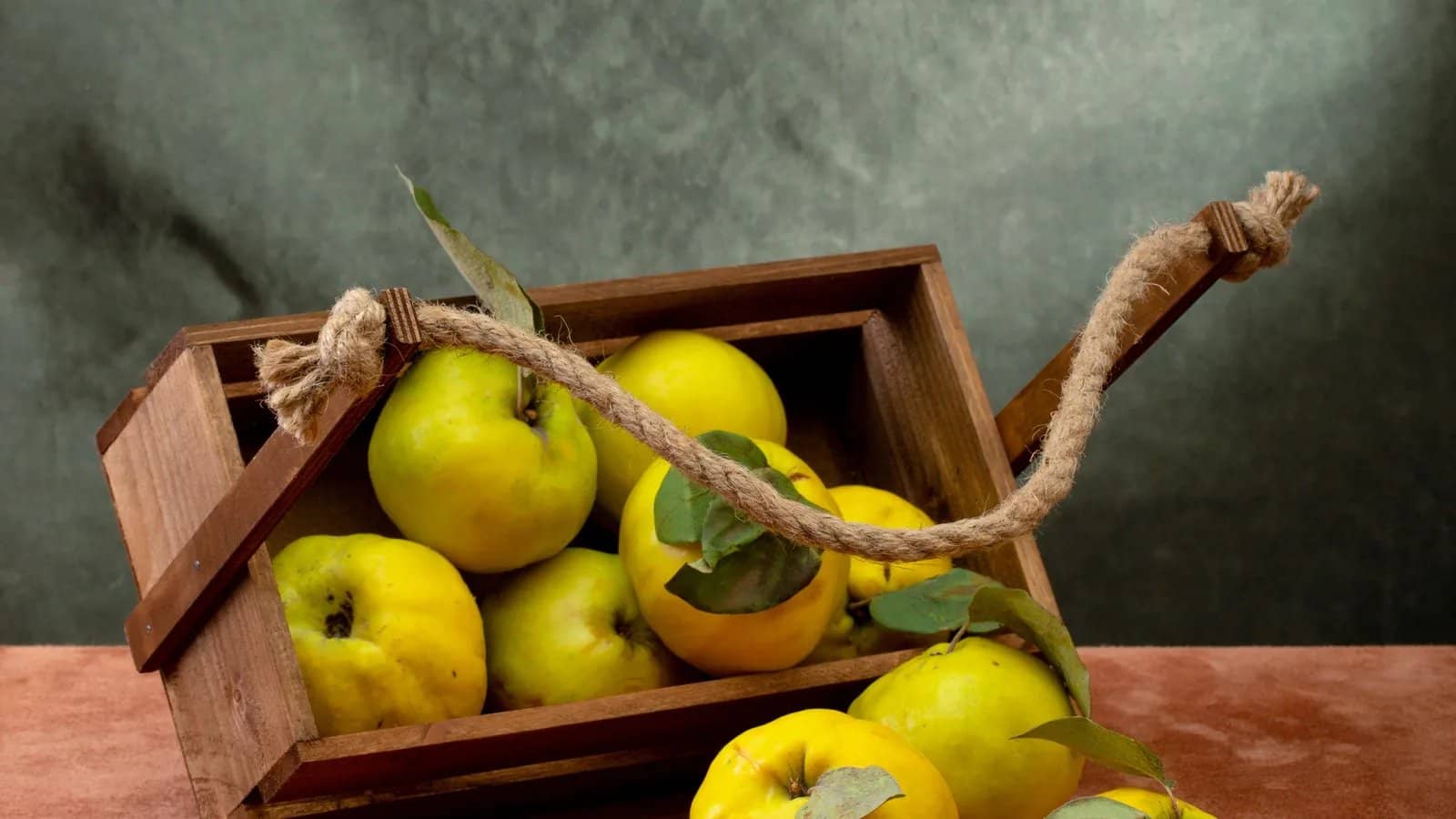
The change in skin colour from green towards yellow is an important maturity cue. Full-yellow fruit that remains firm can suit many kitchen applications, but colour should not be used alone. Check cultivar-appropriate appearance, size, aroma, firmness, surface condition, bruising and freedom from decay. Fruit harvested too late may have less storage potential. Conversely, a firm exterior does not rule out impact damage caused during picking, packing or transport.
Practical receiving checklist
Match the order, delivery note, lot identity, container count and net quantity.
Sample cartons from different pallet positions rather than examining only the top layer.
Check colour distribution, size range, firmness and characteristic aroma.
Separate fruit with bruises, cuts, splits, pressure marks, mould or decay.
Look for excessive surface moisture and packaging that crushes or restricts ventilation.
Measure product temperature under the site’s documented procedure and record the time.
Photograph nonconformity with the lot and carton details before an authorised acceptance decision.
Quince bruises easily. Tipping cartons, dropping fruit into bins and unstable over-stacking can turn a satisfactory delivery into avoidable waste. Move containers gently, minimise time in an uncontrolled receiving area, and remove damaged or diseased produce before it affects the sound stock.
Set order frequency from real demand
Build the weekly requirement from confirmed covers, functions, historic sales, recipe quantities and a clearly approved contingency. One large delivery may reduce ordering work but can overload a small cold room and extend holding time. Frequent delivery reduces stock age but adds receiving labour. There is no responsible universal shelf-life promise: maturity, handling, packaging, room performance and opening frequency all influence the usable period. The order rhythm should follow the kitchen’s measured consumption and verified facility conditions.
Store by condition and rotate with FEFO
Technical guidance for longer-term quince storage commonly points to about 0°C and 90–95% relative humidity. Treat these as reference conditions, not a guarantee. Airflow, calibration, packaging, initial maturity and condensation control matter, and each operation must follow its validated food-safety and equipment procedures. Keep cartons off the floor, avoid blocking evaporator airflow, prevent freezing and protect fruit from contamination and compression.
Label every lot with its delivery date, supplier or lot code, inspection note and planned use. Apply FEFO—first expired or first quality window to close, first out—rather than assuming the oldest delivery is always the only priority. A short daily check should identify softening, advancing colour, bruising or decay. Isolate affected fruit promptly. For broader seasonal coordination, consult the autumn fruit planning article and compare the receiving workflow with the October pear sourcing guide.
Run a preparation-yield trial
Do not convert purchase price to portion cost with a borrowed yield percentage. Select a representative trial lot and record its received weight. Using the normal recipe, tools and trained preparation method, wash, peel, core and cut the sample. Weigh edible output separately from peel, core, bruised sections and other trim. Record preparation time and, where relevant, the final cooked output. Repeat the test for another lot, size band or recipe before changing the buying specification.
Classify losses by cause: maturity mismatch, transport damage, excessive holding, inconsistent peeling or portioning error. This distinction reveals whether purchasing, handling or training needs attention. Potential use of clean, food-safe trim must remain within the kitchen’s approved recipe, allergen, traceability and hygiene controls; waste reduction should never weaken safety standards.
A controlled call to order
Before confirming supply, align the dish, maturity, size range, weekly quantity, delivery window, receiving owner and available storage position. Browse Elit Yaş Meyve ve Sebze’s fruit selection, then request a lot and delivery quote suited to your operation. When the specification is clear, place the selected quantity in the cart without over-ordering.