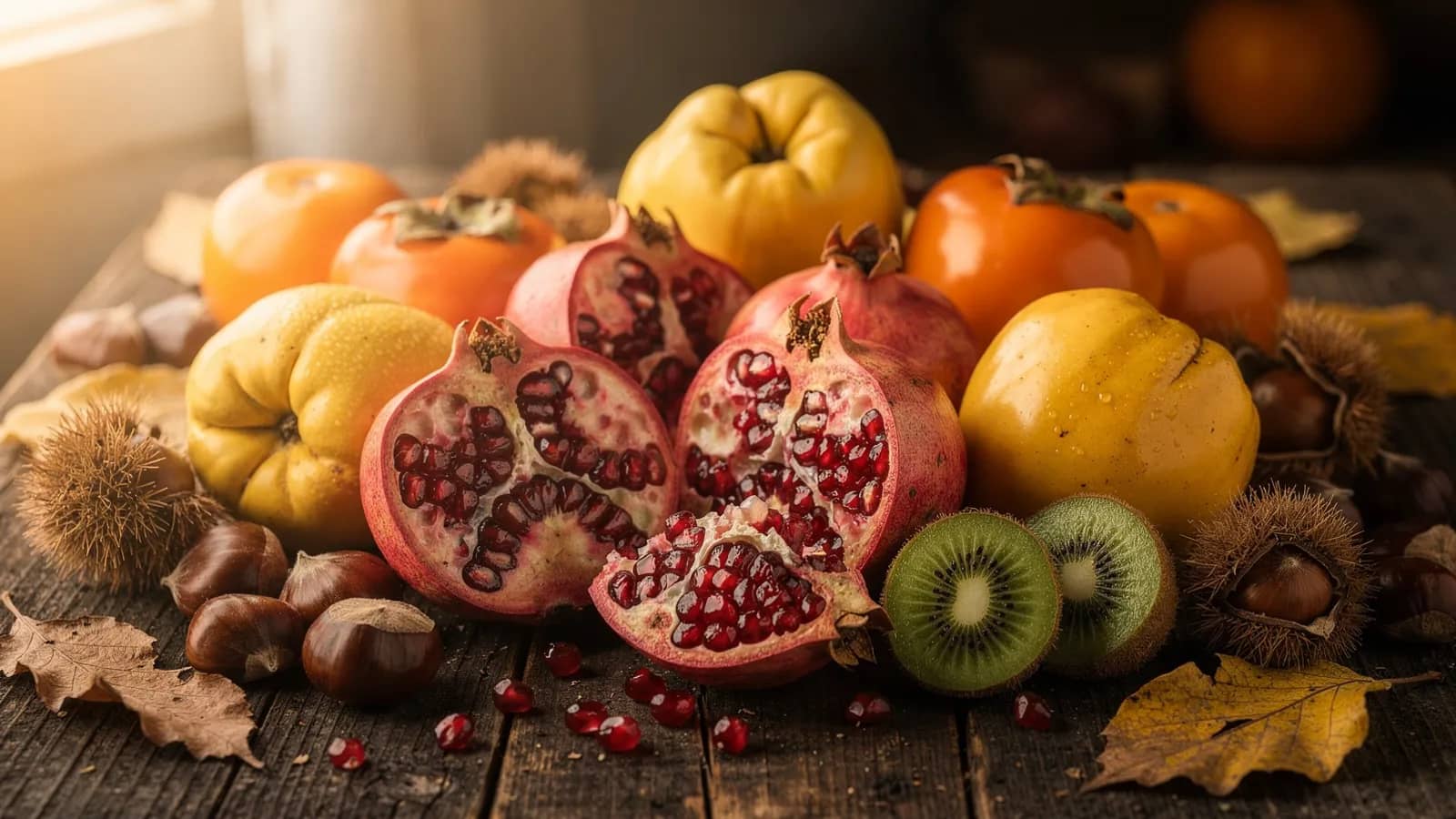
Taking over from summer fruit, autumn fruit brings deep reds, golden yellows and oranges to the market stalls. Most are hardier than summer fruit, and some keep for months when stored correctly, which makes them particularly suited to wholesale buying. In this guide we cover autumn's leading fruits, their seasons, tips for choosing and storing them and how to use them on the menu.
Pomegranate
The pomegranate season opens in late September and runs until December; well-stored pomegranates can be found through the winter. Turkish production is concentrated in southern and western provinces, above all Antalya, Mersin, Adana, Muğla and Denizli. The best-known variety is Hicaz, with large arils and a sweet-sour taste.
- Choosing: a pomegranate with a shiny, firm skin that feels heavy for its size is juicy and ripe. Small cracks in the skin usually point to over-ripeness or uneven watering; cracked fruit spoils quickly.
- Storage: whole pomegranates keep a long time in a cool, airy place. Seeded arils should be kept in a closed container, cold, and used within a few days.
- On the menu: arils in salads and meze, dessert garnishes, freshly squeezed pomegranate juice and cocktails.
Quince
Quinces are harvested from October to December and can be kept in cold storage until spring. Because they are hard and astringent, they are mostly eaten cooked.
- Choosing: a yellow colour shows ripeness; the light downy layer on the skin is natural. Avoid bruised quinces with brown spots.
- Storage: quinces have a strong fragrance that transfers to nearby produce, and they also give off ethylene. Keep them away from sensitive and odour-absorbing produce.
- On the menu: Turkish quince dessert, jam and paste, and a sweet-sour partner in meat dishes and stuffed dishes.
Persimmon
Persimmons are in season from October to December. Varieties fall into two groups, and the difference matters when buying:
- Astringent varieties: leave a furry feeling in the mouth when firm; they are eaten only once fully soft and jelly-like.
- Non-astringent varieties: can be eaten while firm and sliced like an apple.
Stating which type you want and when you will use it ensures the fruit arrives at the right ripeness. Firm persimmons ripen at room temperature; placing them next to a ripe apple or banana shortens the wait.
Kiwi
Kiwis are harvested in October–November and kept in cold storage until spring. In Turkey they are grown mainly around Yalova and along the Black Sea coast.
- Choosing: a kiwi that gives slightly when pressed is ready to eat; firm kiwis ripen within a few days.
- Storage: kiwis are very sensitive to ethylene. Unripe kiwis stored with apples or pears soften quickly. Keep kiwis for long storage cold and away from ethylene-producing fruit.
- On the menu: fruit platters, breakfast buffets, pastry decoration and smoothies.
Chestnut
Fresh chestnuts are available from October to December. Besides being the classic roasted snack of winter evenings, they are used in desserts and meat dishes.
- Choosing: the shell should be glossy, plump and heavy; a light chestnut that feels hollow when shaken has dried out. Small holes may indicate worms.
- Storage: fresh chestnuts are not as durable as dried nuts; they lose moisture or can go mouldy. Keep them cool in a perforated container and use them quickly.
- On the menu: roasted chestnuts, chestnut purée, rice pilaf and meat dishes with chestnuts, candied chestnuts.
Other autumn fruits
- Pears: winter varieties such as Deveci are harvested in autumn and keep a long time in storage.
- Apples: newly harvested apples arrive from September; this is when they are freshest and crispest.
- Grapes and figs: still strong in September; their season closes in October.
- Jujube, cornelian cherry and physalis: short-season, eye-catching fruits that make a difference on dessert presentations and breakfast plates.
- Medlar: arrives in November–December and is eaten once it has softened completely.
Storing autumn fruit
- Separate the ethylene producers: apples, pears, quinces and ripe persimmons give off ethylene; kiwis and herbs are the most affected.
- Watch odour transfer: the smell of quinces and ripe fruit can pass to dairy products and other fruit.
- Check regularly: for fruit stored long term (pomegranates, quinces, apples), checking crates weekly and removing spoiled fruit protects the whole crate.
For general storage rules, see our cold chain guide, and for the season's vegetables, our article on autumn and winter vegetables.
A few menu ideas
- Arugula salad with pomegranate and walnuts; meze with pomegranate molasses.
- Quince dessert or baked quince; meat dishes with quince.
- A colourful autumn fruit platter with kiwi, persimmon and pomegranate.
- Main courses served with chestnut purée.
You can find all fruit in season on our fruit list, gather it together with vegetables in one cart and ask for a price list. For the whole year at a glance, see our season calendar.