For reliable October spinach supply, professional kitchens should buy to a menu-led forecast, inspect every delivery for fresh, clean and resilient leaves, move accepted cases promptly into cold storage, and track usable yield rather than case price alone. This approach protects service quality while reducing over-ordering, unnecessary trimming and avoidable waste.
Set the specification before placing the order
A useful buying specification describes what the kitchen needs, not simply the product name. State the intended dishes, preferred leaf size, acceptable stem level, pack format and delivery frequency. A breakfast operation using folded eggs may want tender leaves with minimal prep, while a banqueting kitchen producing cooked sides can often work efficiently with more mature leaves.
Use fresh spinach for professional kitchens as the core reference, then align order quantities with covers, recipe portions and the preparation method. Raw salads, sautéed sides, fillings, soups and sauces do not return the same usable yield, so one generic purchasing factor can distort the order.
Write an operational acceptance checklist
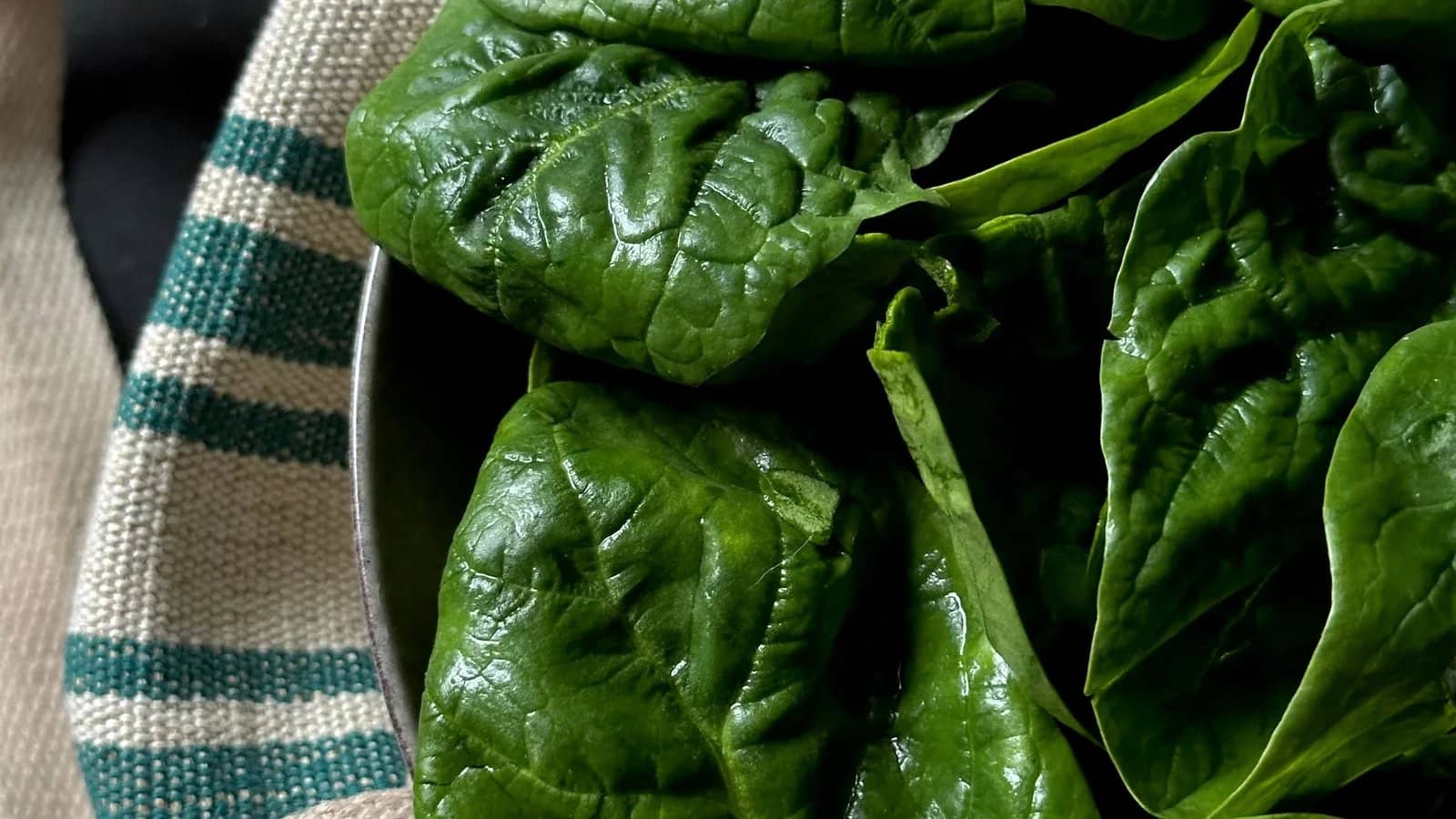
Leaves are uniformly green, fresh looking and turgid rather than limp.
Product is clean, well trimmed and free from visible foreign material.
Yellowing, discoloration, decay and excessive wilting are absent.
Leaves show no significant crushing, tearing or other mechanical damage.
Cases, liners and labels arrive intact and suitable for traceability.
These points reflect widely used quality references from UC Davis and USDA AMS. They are practical procurement criteria, not a claim that a U.S. grade is local law. The kitchen should also apply its own food-safety plan, supplier agreement and applicable local requirements.
Control receiving before stock enters the kitchen
Receiving is the best moment to stop poor quality from becoming prep loss. Schedule deliveries when a trained employee can inspect them without delaying service. Open representative cases, look beyond the top layer and compare the shipment with the agreed specification. Record rejected quantities and the reason clearly enough for purchasing and the supplier to review recurring issues.
Watch especially for condensation, compressed leaves, damaged packaging, yellow areas, decay, strong off-odours or excessive soil. Physical damage accelerates deterioration, while exposure to ethylene-producing items can encourage yellowing. Keep spinach away from incompatible produce during receiving and storage, and avoid leaving cases in busy, warm staging areas.
Keep the cold chain visible
Move accepted spinach into designated cold storage promptly. Follow the kitchen's verified storage controls rather than relying on an assumed universal setting. Monitor the storage area, keep airflow paths clear and avoid stacking that crushes delicate leaves. Rotate by receipt and condition, using clear date and lot identification.
Codex guidance for fresh leafy vegetables emphasises careful handling, rapid cooling, monitored wash water, controlled cold storage and traceability. Translate those principles into simple shift duties: one person checks the delivery, one record identifies the lot, and the handover confirms where the product was stored.
Measure prep yield, not just purchase weight
The cheapest case is not economical if trimming, sorting and spoilage remove too much product. Run a short yield check by recording received weight, discarded material and recipe-ready weight. Repeat the check across suppliers, pack formats and intended uses. The resulting yield percentage gives chefs and buyers a more realistic cost per usable portion.
Separate unavoidable trim from preventable loss. Tough stems removed for a specific recipe may be planned trim; yellow leaves caused by over-ordering are not. Likewise, damage from rough handling or overloaded storage is an operational loss. Tagging the reason makes purchasing data useful instead of turning every discard into one vague waste figure.
Standardise preparation
Prep only the volume required for the next production window.
Handle leaves gently and use clean, suitable tools and containers.
Follow the site procedure for washing and monitor wash-water controls.
Drain effectively so excess water does not undermine texture or recipes.
Label prepared batches for identification and controlled rotation.
For broader handling routines, review ways to keep leafy greens and herbs fresh longer. Procedures should be adapted to the operation's approved food-safety system and equipment.
Plan menus around flexibility and full utilisation
October menus work best when spinach has more than one approved destination. Allocate the best intact leaves to dishes where appearance matters, then direct sound smaller leaves to cooked applications such as omelettes, savoury pastries, pasta fillings, soups or sauces. This is not permission to use deteriorated product; anything outside the acceptance or food-safety standard should be handled under the site's rejection and disposal procedure.
Build substitution logic before a supply change occurs. Swiss chard for foodservice can support selected cooked dishes after recipe testing, while foodservice arugula may suit salads, garnishes and finishing applications where its flavour profile is appropriate. Test portions, cooking behaviour, seasoning and allergen documentation before changing a live menu.
The guide to autumn and winter vegetables in Turkey can help chefs create seasonal alternatives rather than making emergency substitutions. A flexible menu specification gives purchasing room to protect consistency without promising that unlike greens will perform identically.
Reduce waste through smaller, better-informed orders
Forecast by daypart, reservation level, event count and historical usage. Compare forecast quantity with actual issued quantity and end-of-shift stock. When demand is uncertain, more frequent deliveries may reduce exposure, provided the ordering and delivery model remains operationally efficient.
Review yield and rejection notes with the supplier.
Use first by condition as well as receipt sequence.
Move suitable surplus into an approved secondary recipe early.
Keep prep batches small enough to match service demand.
Record waste by cause: receiving, storage, prep or forecasting.
A weekly review should connect purchasing, kitchen and service data. If waste rises, identify whether the cause is incoming quality, poor rotation, unsuitable pack size, recipe variation or lower-than-expected covers. Correct the cause before simply reducing the next order, which could create shortages.
A practical October ordering routine
Start with confirmed menus and expected covers. Convert recipe portions into recipe-ready weight, adjust with the kitchen's measured yield, subtract usable stock on hand and divide the requirement across planned deliveries. Send the quality specification with the order, then capture receiving, yield and waste results for the next cycle.
For coordinated produce sourcing across cafés, restaurants, hotels, caterers, offices and institutions, explore the professional vegetable range and build an order around real menu demand, handling capacity and delivery rhythm.