Herbs and leafy greens add colour and aroma to the plate, but they are among the fastest-spoiling items in any kitchen. At the market most of them are sold by the bunch, and how long a bunch stays fresh depends largely on how it is handled after delivery. In this article we first sort greens by how long they last, then cover seven ways to cut waste, tips for the prep stage and how to find the right order quantity.
Know your greens: they don't all spoil at the same speed
Greens that arrive in the same crate can have very different shelf lives. Sorting them roughly into three groups makes it easier to decide which to use first:
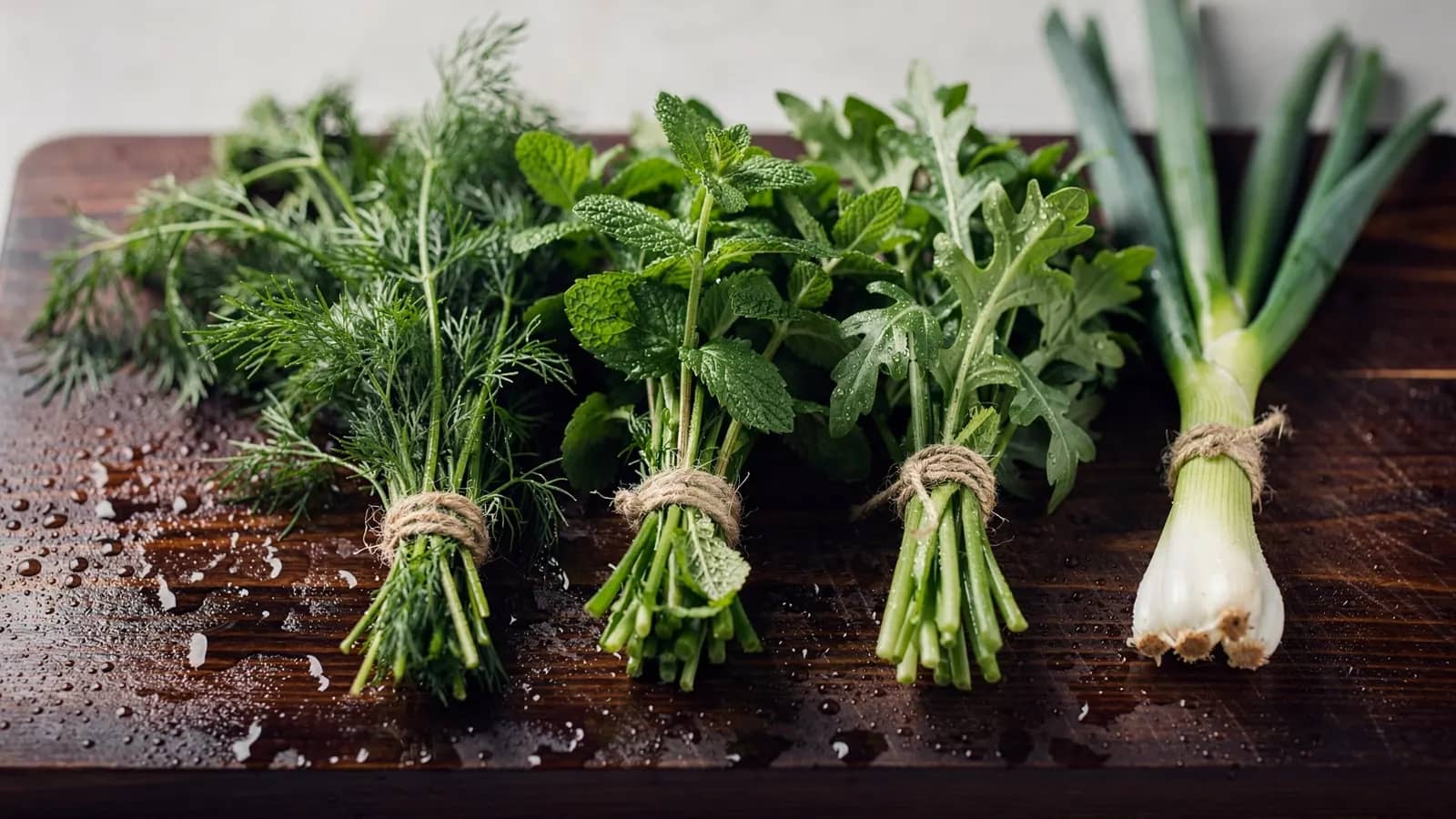
- Most delicate: arugula, cress, basil and purslane. Their thin leaves are very sensitive to moisture loss and bruising; ideally use them within the first day or two after delivery.
- Medium: parsley, dill and mint. With their stems in water they stay lively for several days.
- Hardier: spring onions, chard and collard greens. Thanks to their firm leaves and stems they last longer in the right conditions.
1. Check the bunch before opening it
At delivery, look for upright, lively leaves and firm stems. Remove yellowed or crushed leaves straight away; spoilage spreads quickly within a bunch. Look inside too: a bunch that looks fresh outside can hide leaves darkened by moisture in the middle.
2. Refresh the stems and store them like a bouquet
Trim a few millimetres off the stems of parsley, dill and mint and stand them upright in a container with a finger of water at the bottom. Cover loosely with a bag and keep cold. Change the water daily. This makes up for the moisture the leaves lose and lets the bunch recover.
3. Keep arugula and cress damp, not wet
Delicate arugula and cress do not like sitting in water. Wrap them in a slightly damp cloth and store them cold in a perforated container. The aim is to keep excess water away without drying the leaves.
4. Wash right before use
Washing greens before storage speeds up rot because water stays between the leaves. Wash them in plenty of water just before use and drain well. For greens that hold soil (spinach, chard, purslane), change the water several times.
5. Keep them away from ethylene producers
Apples, pears, bananas and tomatoes release ethylene as they ripen, and greens yellow quickly when exposed to it. In the cold room keep greens on a separate shelf. For more on ethylene and storage groups, see our cold chain guide.
6. Protect basil from the cold
Basil is different from other herbs: it turns black in the cold. It lasts better with its stems in water, at room temperature and out of direct sunlight.
7. Order little and often
With greens, the most effective method is not to keep them in storage for long. Calculating weekly consumption in bunches and splitting the order into several deliveries a week protects both freshness and cost.
Keeping greens fresh during prep
Waste also happens during mise en place before service. A few habits reduce it noticeably:
- Use a sharp knife: a blunt knife crushes the leaf and the cut surface darkens quickly.
- Dry thoroughly after washing: a salad spinner or a clean cloth stops chopped greens from going watery.
- Chop greens daily: keep them in a lidded container lined with paper towel, cold, and use them the same day.
- Add dressing and lemon at the last minute: acid and salt wilt leaves fast.
Make use of trimmings
Not every stem and leaf has to be thrown away. Parsley and dill stems add aroma to stocks and soups. Slightly wilted arugula and spinach can be sautéed or used in soup. Surplus mint and basil can be dried or turned into oils and sauces. Noting for a few weeks how much waste each product produces is the most reliable way to set the right order quantity.
Finding the right quantity
The goal when ordering greens is to buy enough to last until the next delivery. To do that:
- Record the weekly consumption of each herb in bunches for a few weeks.
- Split consumption across delivery days; increase the last delivery of the week slightly for the weekend rush.
- If a new dish or promotion is coming, update the quantity in advance.
By the bunch or by the kilo?
Parsley, dill, mint, arugula, cress, spring onions, asparagus and chard are usually bought by the bunch, while purslane and spinach go by the kilo. Our list shows the sale unit of every product so you can enter quantities accordingly. For more wholesale tips, read our buying guide, and for fresh greens browse the vegetable list.