The tomato is the most used vegetable in the kitchen: from breakfast to salads, sauces and the grill, it appears on almost every menu. But "tomato" is not a single product. Variety, growing location and ripeness directly affect flavour, texture, waste and therefore cost. In this guide we cover the tomato types you will meet most often at the wholesale market, what each is good for, the greenhouse and field seasons, and how to choose the right tomato when buying wholesale.
The most common tomato types at the market
Round (standard) tomatoes
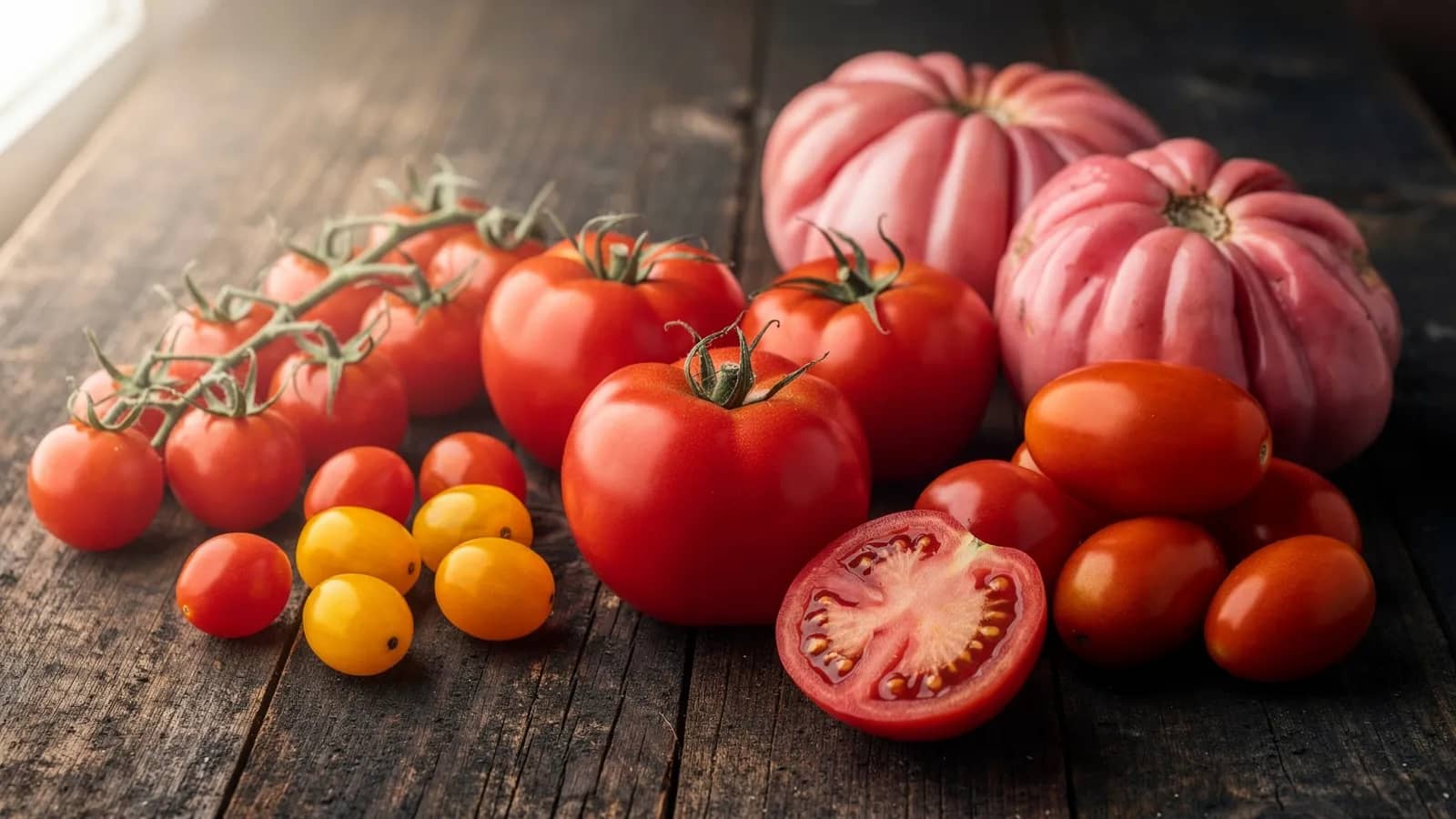
When people at the market say "tomato", they usually mean this type. Medium to large, round and versatile: it works for salads, cooking, breakfast and sauces. With the right size and ripeness, it is the kitchen's main tomato.
Vine (truss) tomatoes
Sold on the vine, in clusters. The fruit is even in size and uniform; thanks to the fresh smell and look of the vine it is preferred for displays, buffets and presentation. It usually comes from greenhouses and costs more than round tomatoes; the weight of the vine is included in the price.
Cherry and cocktail tomatoes
Cherry tomatoes are small, sweet and highly aromatic. They are ideal for breakfast plates, salads, garnishes and oven dishes. Cocktail tomatoes are an in-between size, slightly larger than cherries and smaller than round tomatoes. Because they are used whole, they need no chopping and produce little waste.
Pink tomatoes
Known for thin skin, juicy flesh and strong aroma. In summer, during the field season, they are the tastiest tomato for salads and breakfast. Their thin skin makes them sensitive to transport and waiting, so buy them in quantities you will use quickly.
Paste (processing) tomatoes
Oval, fleshy and low in juice. Their high dry-matter content means they release less water when cooked and give a thicker sauce. They are plentiful at the end of summer, at the peak of the field season, and are an economical option for kitchens that make sauces, soups and preserves.
Green tomatoes
Picked unripe at the end of the season and used for pickles, frying and jam. They appear at the market in autumn with the first cold spells.
Greenhouse or field?
In Turkey tomatoes are available all year, but they do not come from the same place every month:
- Greenhouse season (roughly October–June): tomatoes come mainly from Mediterranean greenhouses, above all around Antalya and Mersin. Size and appearance are uniform; the price is higher than in the field season.
- Field season (roughly July–October): open-field tomatoes come from the Marmara, Aegean and Central Anatolia regions. Flavour is at its highest and price at its lowest. It is also the peak for paste and pink tomatoes.
Timing tomato-led dishes (shepherd's salad, tomato soup, bruschetta) to the field season pays off in both flavour and cost. For the overall season table, see our season calendar.
Choose ripeness carefully
Tomatoes keep ripening after harvest. Stating ripeness in your order according to the day of use reduces waste:
- Fully red: for use the same or the next day, especially for sauces and soups.
- Turned red but firm: salad and presentation tomatoes to be used within 2–3 days.
- Between pink and red: for tomatoes that will wait a few days or for kitchens with long gaps between deliveries.
Ordering at two ripeness levels (part for immediate use, part for a few days later) works well with a weekly delivery pattern.
Which tomato for which dish?
- Salads: firm, evenly sized round tomatoes, or pink tomatoes in summer.
- Breakfast: round tomatoes for slicing, cherry and cocktail tomatoes.
- Sauces, soups, stews: ripe round or paste tomatoes. Size does not matter; small or mixed sizes cut cost.
- Grill and oven: medium round, vine or cherry tomatoes.
- Stuffed tomatoes: large, even and firm round tomatoes.
- Garnish and buffet: cherry and vine tomatoes.
Checking the delivery
- No cracks, bruises or soft spots on the skin.
- No mould or darkening around the stem.
- The bottom layer of the crate should be as sound as the top; bruising usually starts at the bottom.
- Ripeness should be as requested.
Storage: tomatoes dislike the cold
Tomatoes are among the products most sensitive to chilling injury. At fridge temperature they lose aroma, turn mealy and stop ripening. The ideal is a cool shelf at about 12–15 °C. Fully ripe tomatoes can be chilled briefly; letting them come back to room temperature before use restores their aroma. Because tomatoes give off ethylene as they ripen, keep them away from cucumbers, lettuce and herbs. For details, see our cold chain guide.
Ways to cut waste
- Instead of throwing away overripe tomatoes, send them to cooked dishes such as sauces, soups or menemen.
- If sauces need peeled tomatoes, blanching them briefly in boiling water and plunging them into cold water removes the skin easily with little waste.
- Don't let chopped tomatoes sit for long; the cut surface releases water and spoils quickly.
You can find tomatoes and cherry tomatoes on our vegetable list; for a specific type such as vine, pink or paste tomatoes, use the "Other" field. Add your size and ripeness preferences to your request and ask for a price list from the cart.